
Design and Technology
Our ambition is to provide a safe but challenging and creative workspace where students believe in their ability, show respect for each other and their environment and are determined to work to the best of their ability. Our aim is that students are stimulated through a range of learning styles to become independent learners and gain transferable skills. Their learning experience will familiarise them with traditional manufacturing techniques, new materials, and emerging technologies.
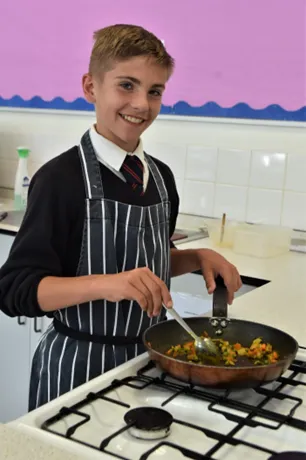
The Technology subjects offered at Applemore include Food and Nutrition, Engineering and Design and Technology.
During Key Stage 3, students study different aspects of Technology by completing stimulating modules using materials such a cardboard, woods, metals, electronics, textiles and food. The Department aims to provide a safe, challenging, working environment which encourages every child to work with respect for others and to the best of their ability. These subjects provide opportunities for students to develop their technical capabilities and creativity combining their designing and production skills with knowledge and understanding to create prototype products.
Students experience a range of learning styles and practical activities to develop their confidence and belief in their abilities and become independent learners. Students gain transferable skills and keep abreast of modern technologies, manufacturing techniques and materials.
Students solve problems individually and as members of a team. They use practical and intellectual skills combined with an understanding of aesthetic, technical, cultural, social, industrial, and environmental issues to design a range of products.
Through our Technology subjects, students develop confidence in using practical skills and become discriminating users of products. They apply imagination, creative thinking and determination to make products that solve real and relevant problems within a variety of contexts.
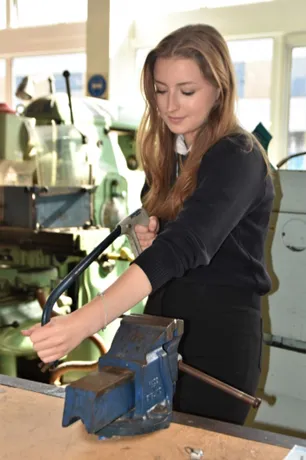
Our Staff

Mr S Mainstone

Mrs S Ballard
Core Information
ACCESSIBILITY – SEND PROVISION
- Healthy Foods and Nutrition
- Juggling Balls textiles project
- Ugly Bugs automaton project
- Burger Product design and modelling project
EXTRA CURRICULAR
- Key stage 3 Food club Key stage 4 Food club
- Key stage 4 Revision / Course work catch-up sessions in Engineering and Design and Technology
- Visit to Sunnyfields Organic Farm
- Women in Engineering
RESOURCES
- Apps – AppleLink
- Software – Techsoft 2D Design
- Software – Sketchup
- Software – FreeCAD
- Links – Technologystudent.com
- Links – BBC Bitesize
- Links – Food a fact of life
Key Stage 3
YEAR 7
- Alternative methods of recording.
- Use of read aloud and text to speech.
- Personalised and dyslexia friendly resources.
- Personalised learning programme
YEAR 8
- Celebration Picnic food and nutrition project
- Patchwork Interiors textiles project
- Desk tidy CAD/CAM project
- Electronic Bug alarm Product
YEAR 9
- Food Festival
- Smart Materials Bed Caddy project
- Technical Design
- Design style clocks
Key Stage 4
GCSE Design & Technology (AQA 8552)
50% Coursework
50% Examination
YEAR 10
- Jewellery storage project.
- Enterprise and industry project investigating contemporary manufacturing methods.
- Celebrating success awards project.
- Child’s interactive toy project.
- Commence GCSE work. Analysis of the context.
YEAR 11
- Generation of a brief, specification and design ideas using a range of techniques.
- Modelling and testing of ideas.
- Making the prototype and evaluation.
- Exam revision programme.
FURTHER EDUCATION
- A level Product Design, A level Fashion and Textiles.
- A variety of GNVQ courses related to the D&T subjects
- Degrees: to name but a few, Graphic & Media Design, Art Design Graphics & Fashion, Food & Nutrition, Food Technology, Jewellery Design, Furniture and Car design. Product Design. Materials Science and a vast array of other engineering disciplines.
CAREER & PROGRESSION
- Studying Design and Technology can help lead to a career in Graphic design, product design, computer game design, architecture, marketing, advertising, illustration, packaging design.
- Fashion design, fashion illustration, interior design and furnishings. Fashion and retail marketing. Science based technical textiles, fashion and media advertisement, clothing construction,
- Disciplines associated with the manufacturing industries such as CAD designers, CAM operator, software engineers, craft based apprenticeships and training in areas such as boat building, carpentry, joinery, electronics, and computer aided manufacture, construction, and the manufacturing sectors.
GCSE Engineering Manufacture (OCR J842)
x3 Assignments
& x1 Exam Paper (25% each)
YEAR 10
- Balance ornament project
- Understanding Technical drawings.
- The Hammer of Thor Paperweight project
- R015 Coursework assignment set by the exam board.
- Car shell competition.
- Trophy award, joining materials.
YEAR 11
- Health and Safety Module
- R016 Coursework module set by the exam board.
- Factories simulation Project.
- R014 Theoretical unit.
- Revision for the examination unit to be sat in June
FURTHER EDUCATION
- Apprenticeship Framework Engineering (Levels 2 & 3)
- A level Product Design, Engineering.
- A variety of vocational courses related to manufacturing and engineering.
- Direct entry into engineering and manufacturing associated disciplines.
CAREER & PROGRESSION
- This qualification provides a valuable foundation in engineering manufacture, preparing students for further study qualifications in Engineering, Business, Computer Science, Art and Design and other related careers.
- Alternatively, the qualification prepares for those wishing to go on to an apprenticeship in a wide range of engineering related subjects. The skills and knowledge gained are directly useful for practical application in the workplace.
GCSE Food Preparation & Nutrition (AQA 8585)
50% Coursework
50% Examination
YEAR 10
- Eatwell guide, healthy diet, nutrition and health and safety.
- Food Science, chilled desserts, menu planning and shopping.
- Food preparation, methods of cooking, desserts, menu planning, costing, communication.
YEAR 11
- Introduction to the GCSE, Individual coursework (NEA1) completion of task accounts for 15% of the overall grade.
- Individual coursework (NEA2) 35% of the grade.
- Revision Programme for the exam 50% of the grade.
FURTHER EDUCATION
- A level Product Design, Nutrition,
- A variety of GNVQ courses related to Food, Hospitality and Catering
- A Variety of Food Science, Food Nutrition, Hospitality & Catering courses
- Degrees in Food & Nutrition, Food Technology.
CAREER & PROGRESSION
- This qualification leads directly to career opportunities within the food and nutrition industries. Direct entry to apprenticeships relating directly to food preparation. Food technologist, sensory scientists, quality control managers, group brand managers, specifications technologist, new product development managers, food developers, food quality auditors.