
Science
The Science curriculum will inspire students to become confident, determined scientists who develop a love of learning science. It will enable students to understand how science fits into society and thereby encourage them to respect their local and wider community. It will challenge students to develop their leadership, organisation and ability to analyse data. Developing these skills encourages students to believe in themselves and follow an ambitious journey onwards to college and future careers.
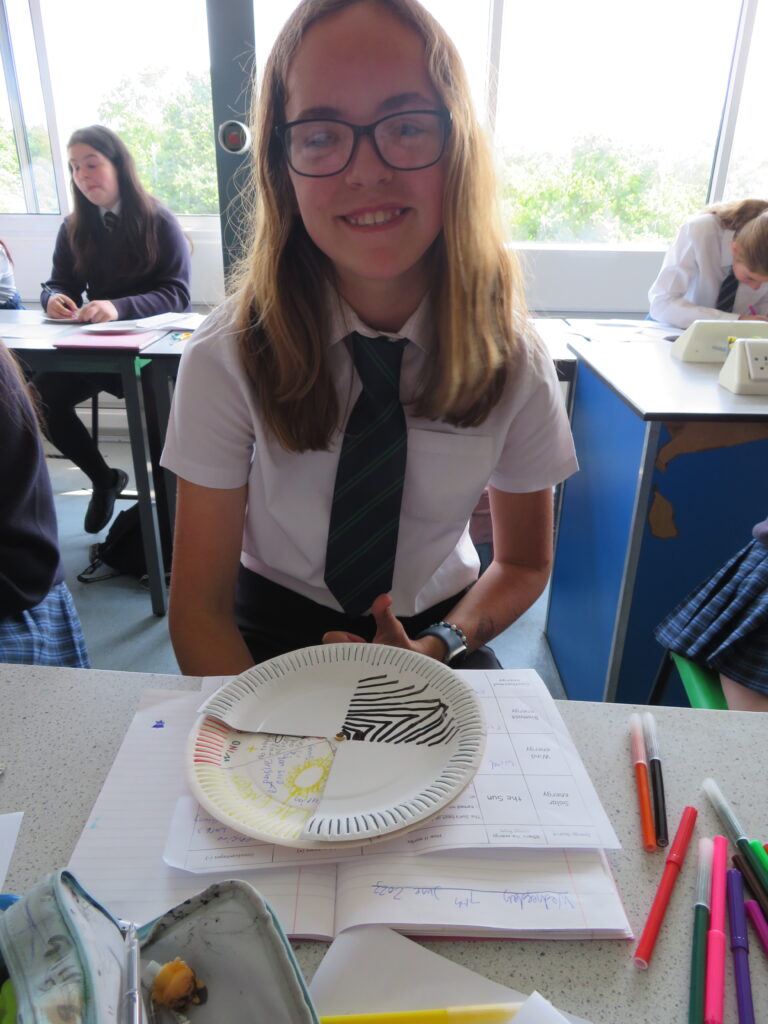
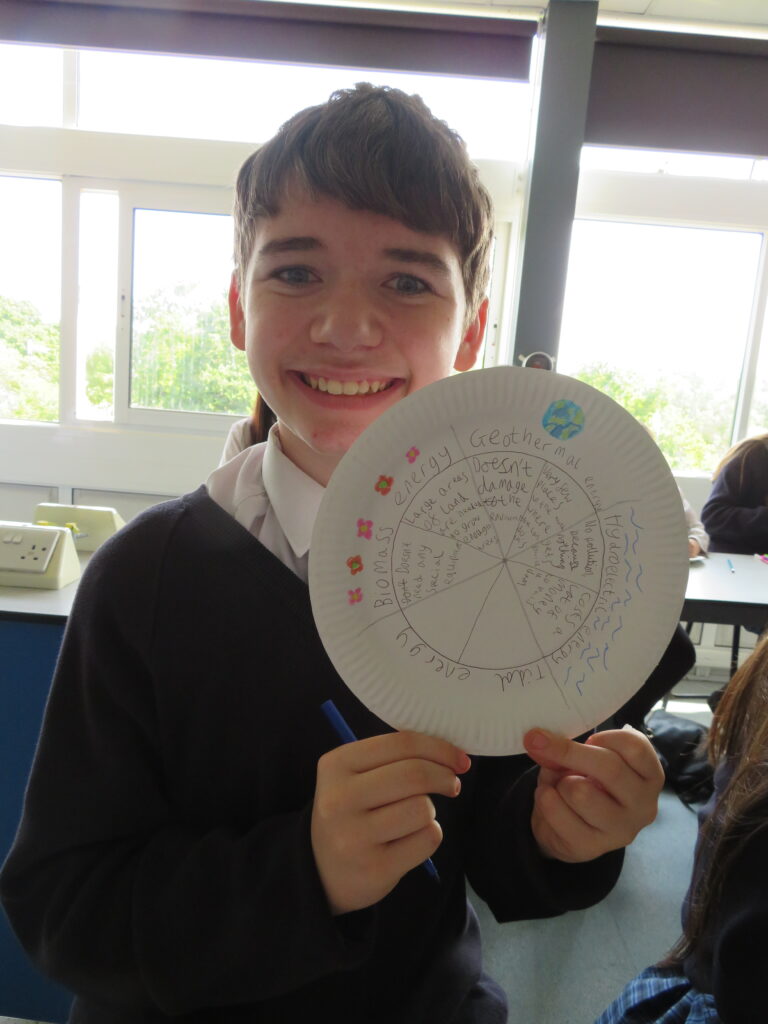
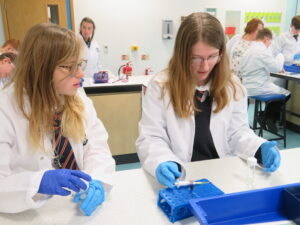
The Science Department at Applemore College is both dynamic and enthusiastic. We offer inspiring learning through a broad range of teaching methods and a diverse curriculum. Students learn all three disciplines of science. The study of Biology fosters an appreciation for the complexity and interactions of the processes, systems, and diversity of the living world. The study of Chemistry develops pupils’ approach to understanding the material world and its properties with an open and analytic mind. The study of Physics fosters curiosity and excitement about the physical world, and develops powerful tools to understand the fundamentals and the connections between different phenomena. We aim for students to progress in both their substantive knowledge (the theory and understanding of the topic) but also their disciplinary skills, such as analysing data, planning experiments, evaluating models and theories and debating moral issues, which are abilities employers regard highly.
Students learn in the classroom, but also immerse themselves in the local area in terms of the wildlife of the site and the New Forest, and our local marine industries and refinery. This allows direct links to the curriculum and relevance to their own experiences whilst developing an understanding of science and extending opportunities to directly apply their knowledge.
Applemore is fortunate to hold excellent community and business links. The Science Department has partnership projects with a range of organisations, including the Lifelab in conjunction with Southampton University and our successful STEM Challenge days held in partnership with Faraday IET. Exxon Mobil also provides additional sponsorship, funding and opportunities for students to see Science in action.
Additionally, the Science Department also holds some excellent links with organisations such as SolentLEP and STEM Portsmouth, which give students opportunities to hear and learn about career opportunities in science through trips and speakers that come to the College. The teaching staff have a passion for Science and an overwhelming desire to share their knowledge with the future generations of Scientists. We are very proud to see so many of them go on to take a range of Sciences at A level and beyond.
Our Staff

Mr S Middleditch

Miss S Cosserat

Ms L Parvin
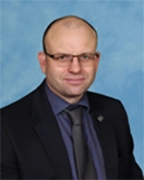
Mr D Mitchell
Core Information
ACCESSIBILITY – SEND PROVISION
- Alternative methods to record data/information
- Pre teach new vocabulary and lots of opportunities to use keywords verbally in lessons
- Clear route through topics and links to previous learning
- Use of real objects and concrete knowledge to develop scientific concepts
- Opportunities to repeat and reinforce skills
- Supported homework with reference links to videos and websites
- Retrieval and interleaving to improve retention of information
- Practical skill demonstrations
- Clear labelling of equipment
EXTRA CURRICULAR
- Science Club & Ecoschools Club
- Trips/Events – Life Lab, Exxon Roadshow & Solent LEP Careers Fayre
FUTURE PATHWAYS
- University
- Employment
- Apprenticeship
- A Levels, BTECs or Apprenticeships in subjects as varied as Biology, Chemistry, Physics, Environmental science, Geology, Earth Science, Medical/Veterinary, Psychology, Sport Science/Physiotherapy, Animal Management, Agriculture, Childcare, Electrical, Engineering
RESOURCES
Key Stage 3
Year 7
- Particle Theory
- Forces
- Cells
- Energy and resources
- Acid and Alkalis
- Chemical reactions
- Reproduction
- Voltage, current and circuits
- Separating mixtures
- Food chains
- Skeleton and movement
- Space
Year 8
- Food and Digestion
- Atoms , Elements and Compounds
- The Periodic Table
- Energy and Heat Transfer
- Chemical reactions
- Health and disease
- Photosynthesis and respiration
-
Electrical circuits
-
Magnetism
- Environmental chemistry
- Evolution and inheritance
Year 9
- Cells and transport
- Growth and cell division
- Structure and history of the atom
- The development of the Periodic table
- Bonding
- Energy resources
- Calculating energy
- Maths skills in Science
- Practical skills in Science
Key Stage 4
Combined Science Trilogy (AQA 8464)
x2 Biology Exam Papers (1hr 15mins each paper), x2 Chemistry Exam Papers (1hr 15mins each paper), x2 Physics Exam Papers (1hr 15mins each paper)
YEAR 10
- Circulatory system
- Communicable diseases
- Preventing and treating disease
- Non-communicable diseases
- Photosynthesis
- Respiration
- The nervous system
- Hormones
- Reactions including acids and metals
- Electrolysis
- Energy changes in reactions
- Rates of reactions and equilibrium
- Crude oil and fuels
- Electrical circuits
- Electricity in the home
- Molecules and matter
- Radioactivity
- Wave properties
- The electromagnetic spectrum
YEAR 11
- Cell reproduction
- Variation and evolution
- Genetics and evolution
- Adaptation, interdependence and competition
- Ecosystems
- Biodiversity and ecosystems
- Chemical analysis
- History of the Earths atmosphere
- Earths resources
- Forces in balance
- Motion
- Force and motion
- Magnets and electromagnetics
Triple Science
(AQA Biology 8461, AQA Chemistry 8462 & AQA Physics 8463)
x2 Biology Exam Papers (1hr 45mins each paper), x2 Chemistry Exam Papers (1hr 45mins each paper), x2 Physics Exam Papers (1hr 45mins each paper)
YEAR 10
- In addition to combined science
- Plant diseases
- The brain and the eye
- Plant hormones
- Homeostasis and the kidneys
- Organic chemistry
- Polymers
- Pressure
YEAR 11
- In addition to combined science
- History of genetics
- Sustainable food
- Ion tests
- Using the Earths resources
- Force and pressure
- Light